
Receiving a Recipient Request
Referrals for the Aged Care Volunteer Visitors Scheme can be made by aged care home staff (using our online Recipient Profile Form or email), as well as by family members, friends, care providers, or medical professionals. To initiate a referral, we require basic information including the recipient’s name, gender, age, and whether they identify with any diverse, complex vulnerability, or cultural groups. Please note that all referrals must be made with the recipient’s full knowledge and consent and all information is kept private and confidential.

Sourcing a suitable visitor
Once a referral is received, we begin the process of finding a suitable volunteer visitor. Occasionally, we may already have an appropriate volunteer on our waitlist, but more often we need to actively recruit someone new for the role. When recruiting, we prioritise shared interests, life experiences, and proximity to the aged care home. While we always aim to make the best possible match, a perfect alignment in every area may not be achievable.

Screening and Checks
Every prospective volunteer is interviewed to ensure they are a good fit for the program. We conduct reference checks and a National Police Check as part of our screening process. If a volunteer will have ongoing contact with an NDIS-funded recipient, an NDIS Worker Screening is also required. In those cases, the aged care home must facilitate the NDIS check as QCCN is not able to. It's important to note that incidental contact with NDIS recipients does not trigger this requirement, and routine NDIS screening for all volunteers is not appropriate under Department of Health guidance.
Volunteer Training
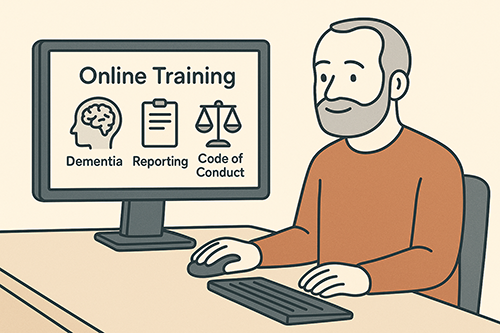
While security checks are underway, all prospective volunteers are provided with comprehensive training resources to prepare them for their role. This training covers essential topics such as infection control, effective communication with individuals living with dementia or disability, and a fundamental understanding of ageing. Volunteers also learn about duty of care, maintaining professional boundaries, recognising and responding to behaviours of concern, and fulfilling their reporting and privacy obligations. In addition, self-care strategies and the Aged Care Code of Conduct are emphasised to ensure volunteers are well-supported and aligned with best practice standards.

Introduction and Onboarding
Once a volunteer's security checks are successfully completed, the onboarding process begins with a site orientation conducted by aged care staff. This usually includes an overview of facility-specific policies, emergency evacuation procedures, and an introduction to key lifestyle team members. The volunteer is also introduced to the resident they will be visiting, and where possible, to multiple potential recipients to provide flexibility and help ensure the best possible match. This thorough introduction supports a smooth start and helps the volunteer feel confident and connected from day one.

Ongoing support and Engagememt
To ensure a positive and sustainable experience, volunteers receive regular follow-ups after they begin their visits. These check-ins help confirm that they are enjoying their interactions and provide an opportunity to identify and address any issues early on. Open and ongoing communication is also maintained with the aged care homes to support the wellbeing of both volunteers and residents, and to strengthen the overall success of the program.

Reporting
After a match is successfully established, Volunteer Visitors are asked to report the number of visits they complete each month. This simple monthly update helps us track engagement, ensure program consistency, and provide necessary support to both volunteers and aged care recipients. It also plays a vital role in maintaining accountability and demonstrating the ongoing impact of the program.